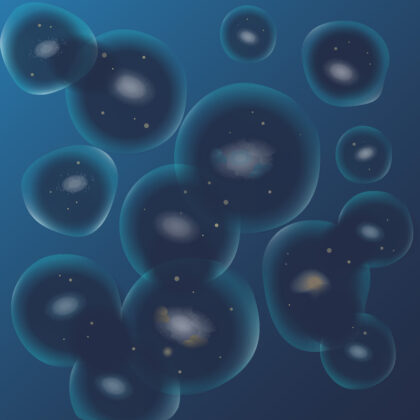
How did the universe become transparent? NASA’s Webb space telescope has found that in the early opaque universe, galaxies were surrounded by huge, clear bubbles, as depicted in this artist’s illustration. The bubbles gradually merged together over about a hundred million years, with the entire universe becoming clear and transparent as a result. Image via NASA/ ESA/ CSA/ Joyce Kang (STScI).
EarthSky News explains Genesis
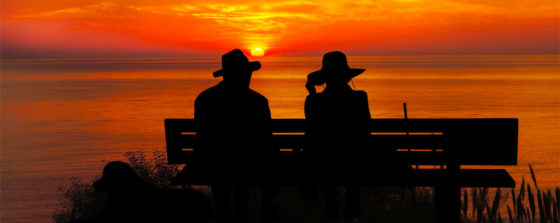
In the beginning, after the Big Bang, stars in clusters formed invisible to one another through dense hydrogen gas. Space was opaque. And darkness was upon the face of the deep.
Starshine slowly ionized the gas, turning it clear. First one, then many glimmers could be seen.
Bubbles of transparency merged to encompass whole galaxies until a whole galaxy was small as a pea inside a hot-air balloon by comparison.
Later (a hundred million years later) the bubbles had all merged –the whole universe transparent to the light. Fiat lux.
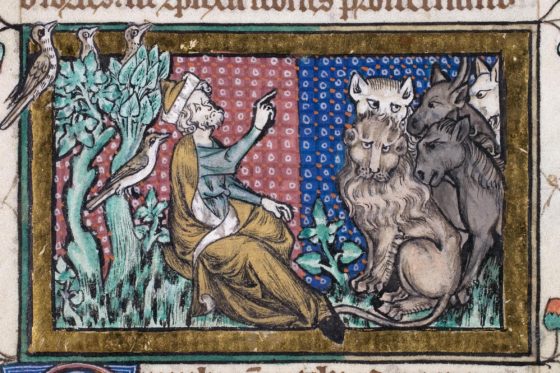
Adam naming the animals of the world, from the Peterborough Bestiary (Cambridge, Corpus Christi College, MS 53, f. 195v, 14th Century)
After years of benign neglect, I’ve been spending time and money in the nurseries and garden tool departments of the hardware store. And I find that working in the garden feels satisfying solid in comparison to the airier pursuits of art.
Sun on the Garden
The part that makes poetry has lain sleeping, and now (after COVID again) tumbleweeds blow through my brain. So instead, I dig and plant and water and mulch and weed, thinking of nothing much under the late spring sun, except how the names of flora make their own kind of poetry: lobelia and marigold, shrub rose and geranium, salvia.
That would make Adam the first poet, I suppose, sitting in the Garden of Eden naming all the animals: “Platypus, I shall call you platypus.” — and all the others, an arkful of the newly named for Noah to salvage from the flood. I name them to myself as they come to check my work: robin, rabbit, chipmunk, butterfly, black fly and whitetail.
This is the power of word. To name it is to see it, to bring its smell to the nose, just as the mind mimes each story even as it’s told, or as we twitch and mutter to dreams. So small the difference between word and world, a thing thin as the skin that separates me from thee, a mere tissue. Yet call it what you will, flesh in fact is fact, and word is air.
I wave the hose head back and forth like a magic wand or a maestro’s baton, calling up water from below the bedrock. But one only tends a garden, encouraging life. The maestro creates no symphony, no matter how dramatically he waves. The flowers know what powers the upthrust of their lives. They turn its way each day as it tracks across the skies.
I will manage to soldier on without a BowFlex body. Photo: star5112, Creative Commons, some rights reserved.
While helping a friend clean out her house in preparation for a cross-country relocation, another helper asked me if I had ever published a particular poem in one of my books. I had read it live on-air for the January 2008 edition of NCPR’s then-monthly arts program, Open Studio, and it had stuck in her mind for 15 years.
As it turns out it has never been published and it has particular resonance for me at this moment when I am finishing up a new volume of poetry, “The Other Village,” and am in search of a publisher. Having finished the draft and ordered the book’s contents, I find I now have nothing but tumbleweeds blowing through my cerebral cortex.
Continuing Resolutions
A New Year Poem
Having put paid to another Christmas (save for the bill-paying), I look down my list for the next bulleted item and find nothing–blank paper– a snowfield of pending ambition.
But, to my credit, I have done nothing this year so egregious as to cause my wife to deposit me at the roadside with a duffel bag of dirty laundry and four thousand used books. Nor has my daughter felt the need to change her name or block my number. The long strands of life remain tied.
And I have worked through another whole year without my boss having to close her office door upon a final quiet conversation before my laptop and I are cast out to wander the virtual streets of Second Life, at loose ends.
The kitchen renovation did, at ruinous expense, come through this year to resolution, but, by the time the rest of the house is made as fit, it will all need to be done again, world without end.
And if my book-in-progress remains unprinted, still, it grinds on toward publication at a steady glacial pace. One can see how, given inexorable pressure from new work behind, it must calve off eventually from the vast shelf of unsolicited manuscripts to join the other bergs of words that obstruct the sea lanes of contemporary literature.
Therefore, in the new year, I will not learn Chinese. No villanelle will appear below my name in The New Yorker. I will manage to soldier on without a BowFlex body, and ballroom dancing will remain, for now, beyond my ken.
In lieu of a bill of particulars, I propose this series of continuing resolutions: to keep my family close, to do my job, to keep the roof above the cellar, and to always enclose a stamped, self-addressed envelope.
Posted inPoetry|Comments Off on Continuing Resolutions
Photo: Karen Arnold, Creative Commons, some rights reserved
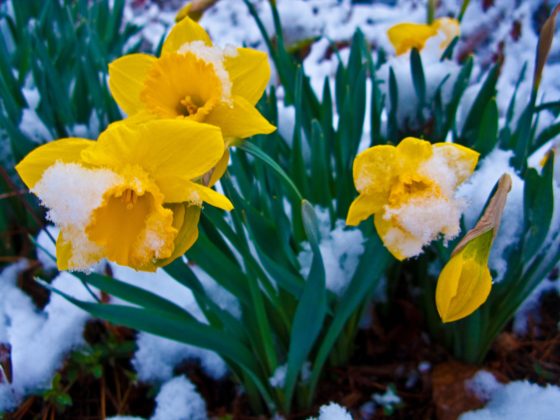
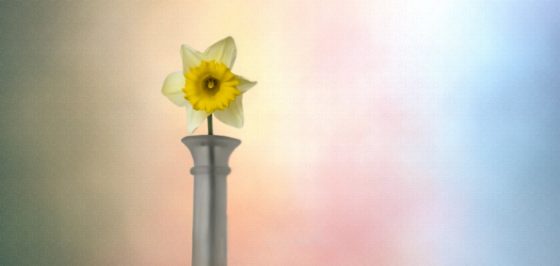
I started this poem Sunday, before snow fell upon the daffodils of today’s haiku. But even a foolish hope is better than none. I have this notion that wisdom is more for the brain, whereas the heart is given to folly. And that’s a good thing.
Young and Old
My father, when he was dying of cancer (younger than I am now), confided to me: “I’ve never felt older than 19 in my heart.”
It explains how I too never feel quite grown up. And my uncles the same: men in the chassis, boys beneath the hood.
It’s a good, thing I think, for the heart to be a little foolish. A soft breeze blows; daffodils bloom. I cherish a foolish hope winter is over.
My own teen years were not my best –except for taking up life with you. Were are hearts not a little foolish, how could we have lasted?
Math fail. Photo: Greg Gjerdingen, Creative Commons, some rights reserved
Nobody starts college without going through freshman orientation and getting a student handbook. But anyone can move up north from Florida and dive straight into a North Country winter with no preparation whatsoever. What could possibly go wrong?
A Newcomer’s Guide to North Country Winter
It’s Darwin pure and simple: walking across thin ice, driving on bald tires, making snow angels after drinking tequila—can get you tossed right out of the gene pool.
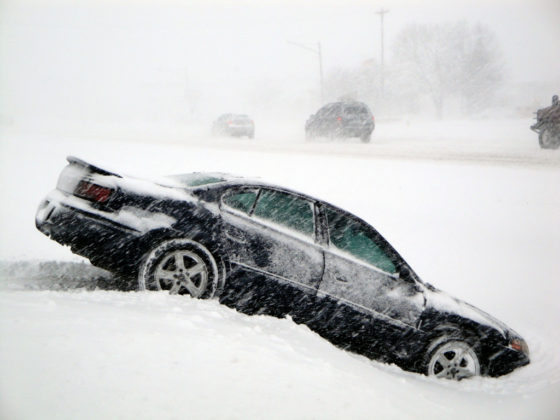
You have to do math in winter. There’s an optimum speed for any road conditions that will keep your car between the ditches. Any faster keeps the wrecker’s kids in college funds.
If you don’t watch where you put your feet while also watching what’s coming down the road, you’ll either break a hip or be lost beneath a beer truck. It’s called situational awareness.
The right amount of snow shoveling allows your car to blast out the drive onto the road. Miscalculate by 10% and you’re a foot short of the pavement with all four tires off the ground.
And if you shovel too much too fast, there’s the cardiac arrest. So, take your time and cultivate good relations with your neighbors. If you do something stupid, they’ll help you out–laugh, but help.
There is a qualitative difference between grace and its near relative, luck. Luck, for good or for ill, is bestowed randomly by an indifferent universe. Grace feels like a personal gift from one who knows your inmost desire.
Grace
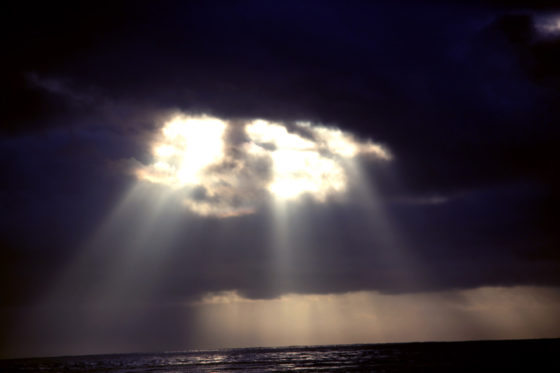
Sometimes while a storm still rages the sun shouts out from the horizon. Sometimes the locked door pounded on a hundred times before is found ajar.
There is no way to make it so. So, wait for it, wait more, and love life. A long season runs between planting and harvest. Anything could happen.